Algebraic Analysis of Coded Data
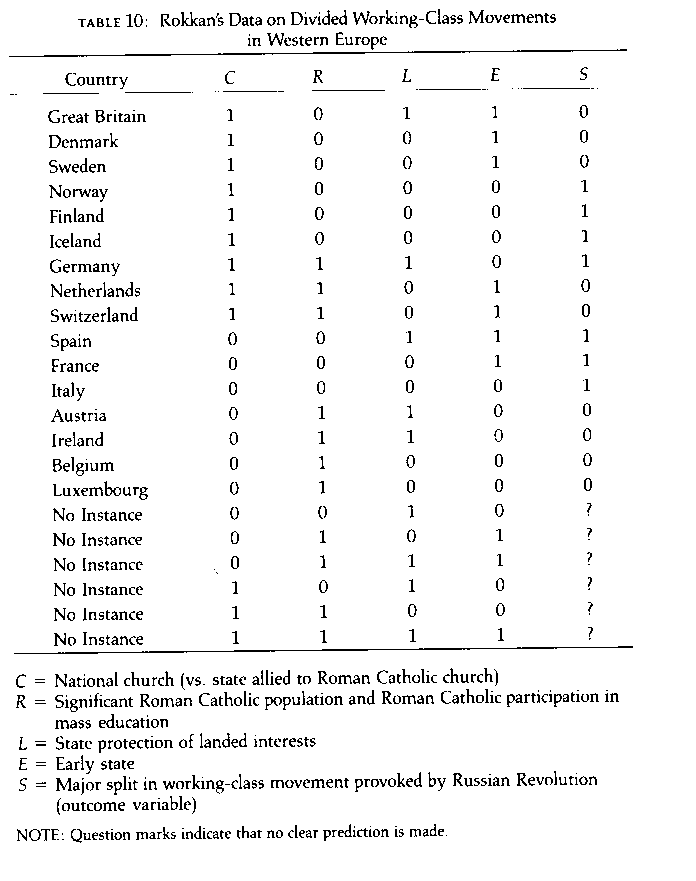
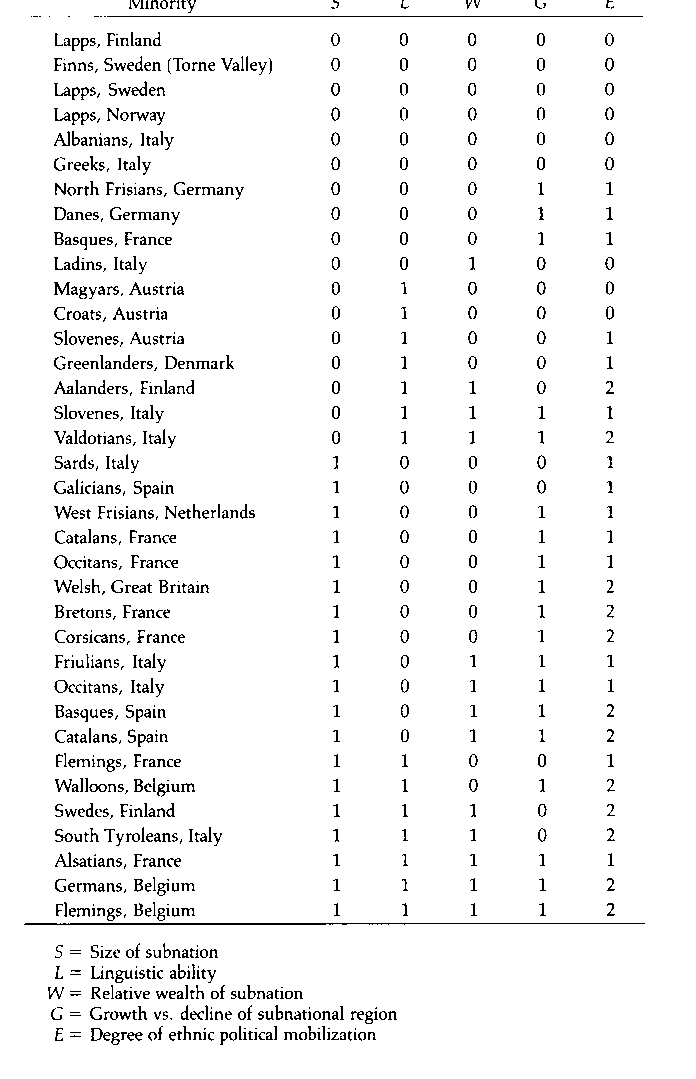
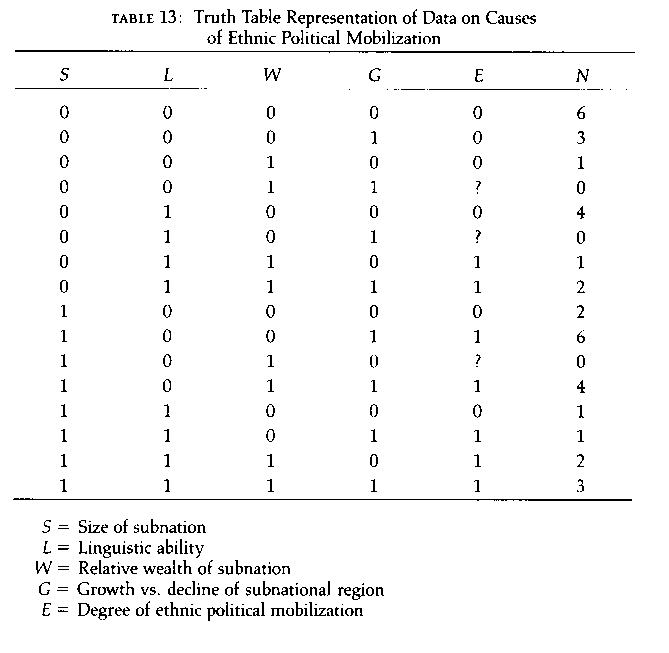
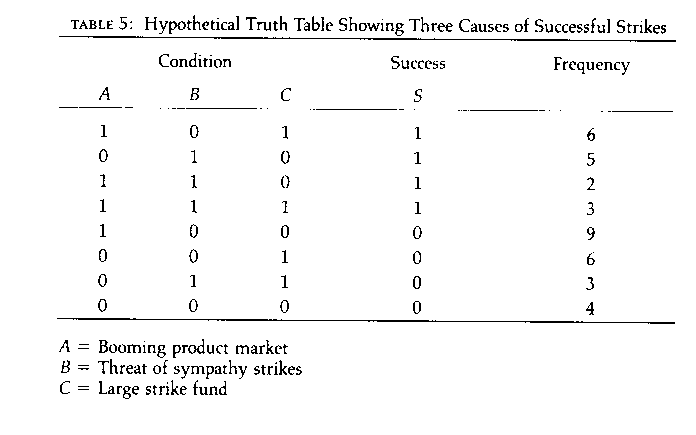
Raw data is code matrix (see table 10). These are grouped by type as in table 5.
OR and AND in Boolean Algebra:
S = AbC + aBc + Abc + ABC
Presence and absence of conditions are equally important. In row 2, B seems to cause S. Don’t know whether absence of a and c is required until we look at other rows.
Principle of Minimization
If two expressions differ by one condition but produce the same outcome, that condition that distinguishes them can be considered irrelevant, and removed.
S = AC + AB + Bc
Sometimes this process results in redundant prime implicants. We can invoke principle of parsimony to delete unnecessary elements.
S = AC + Bc
de Morgan’s Law of Negation
s = (a+c)(b+C) = ab + aC + bc
Necessity and Sufficiency
In F = AC + BC = C(A+B), C is necessary but not sufficient (either A or B must also be present). In S = AC + Bc, nothing either necessary or sufficient. In F = A + Bc, A is sufficient but not necessary. In F = B, B is both necessary and sufficient.
Factoring for Interpretation
S = abc + AbC + abd + E
S = a(bc+bd+E) + A(bC+E)
This highlights what is needed when A is present and what is needed when A is absent.
Problem of Limited Diversity
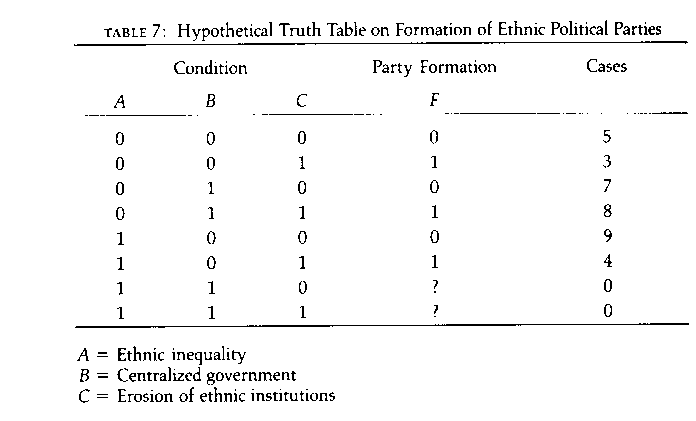
In table 7, using just the rows we have cases for , F = aC + bC. We don’t know what happens when A and B are both present. If the last case is a 1, then F = C.
We can use the methodology to analyze the difference between the present and absent cases, by creating new outcome variable: present vs absent. So put ones for all combinations with nonzero cases.
(do it the long way for practice). We get E = a + b, so by de morgans law, the nonexistants are e = AB.
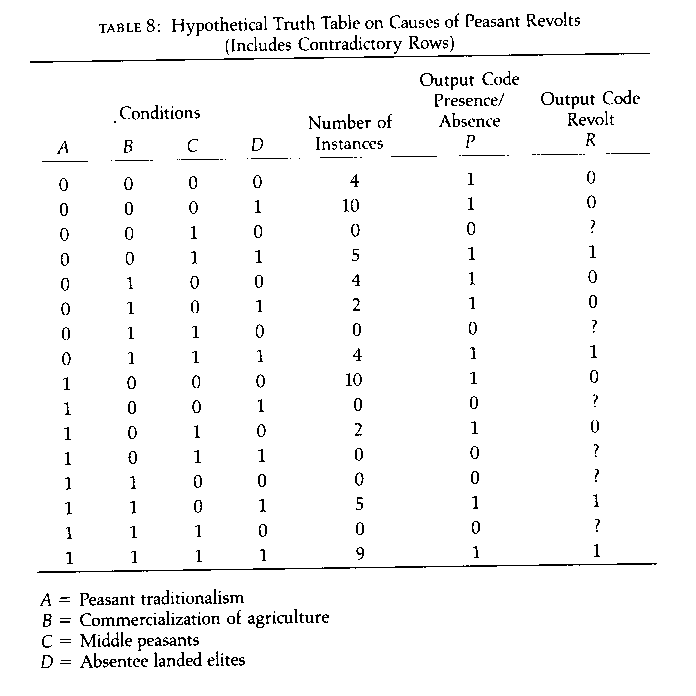
In table 8, analyzing presence of cases gives P = ac + aD + BD + Abd, which says there are 4 basic types of peasant societies. Now suppose we assume that if the excluded kinds of peasant societies did exist, that they would not revolt. Then R = ABD + aCD. This is a subset of the equation for societies that exist. BD includes ABD, and aD includes aCD. So revolts are found in two of the four basic kinds of peasant societies.
Resolving Contradictory Data
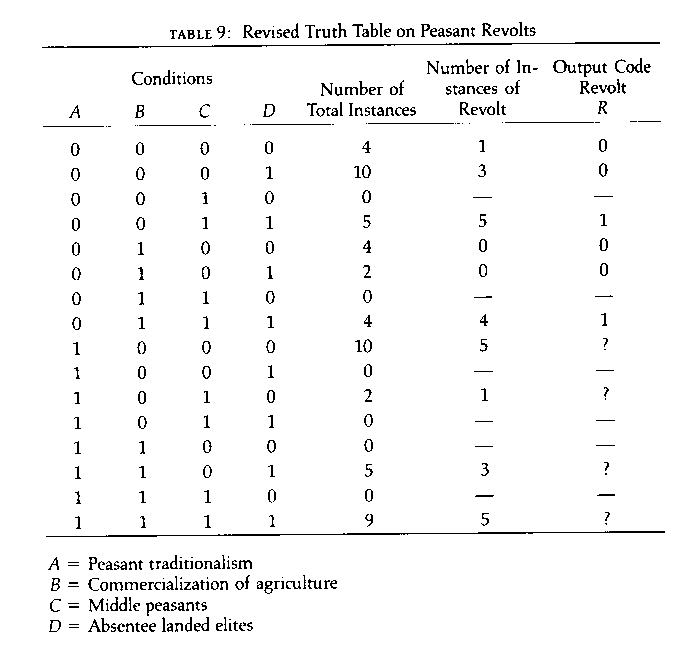
Example is 4th row of the data table. No clear output. We presume existance of a 5th variable that is distinguishing between the cases. Too complicated for this presentation.
Evaluating Theoretical Arguments
Any theory can be expressed as boolean equation. For example, allports theory of prejudice says that ICD+PCD=J (Inequality, Contact, iDentifiability, comPetition, preJudice) . We can compare the equation with the one determined by data.
By multiplying the two (theory and observed equations) together, we can see what they have in common (what parts of the theory were borne out).
Suppose theory on revolts says: T = B + aCd and data shows R = AB + CD. Now consider the cases hypothesized NOT to cause revolts. This is t=Ab+bc+bD. Then intersection tR = (Ab+bc+bD)(AB+CD) = bCD. This term pinpoints shortcomings in the theory. It tells you exactly where there are peasant revolts that are not predicted by theory. (no commercialization, middle peasants, and absentee landlords).